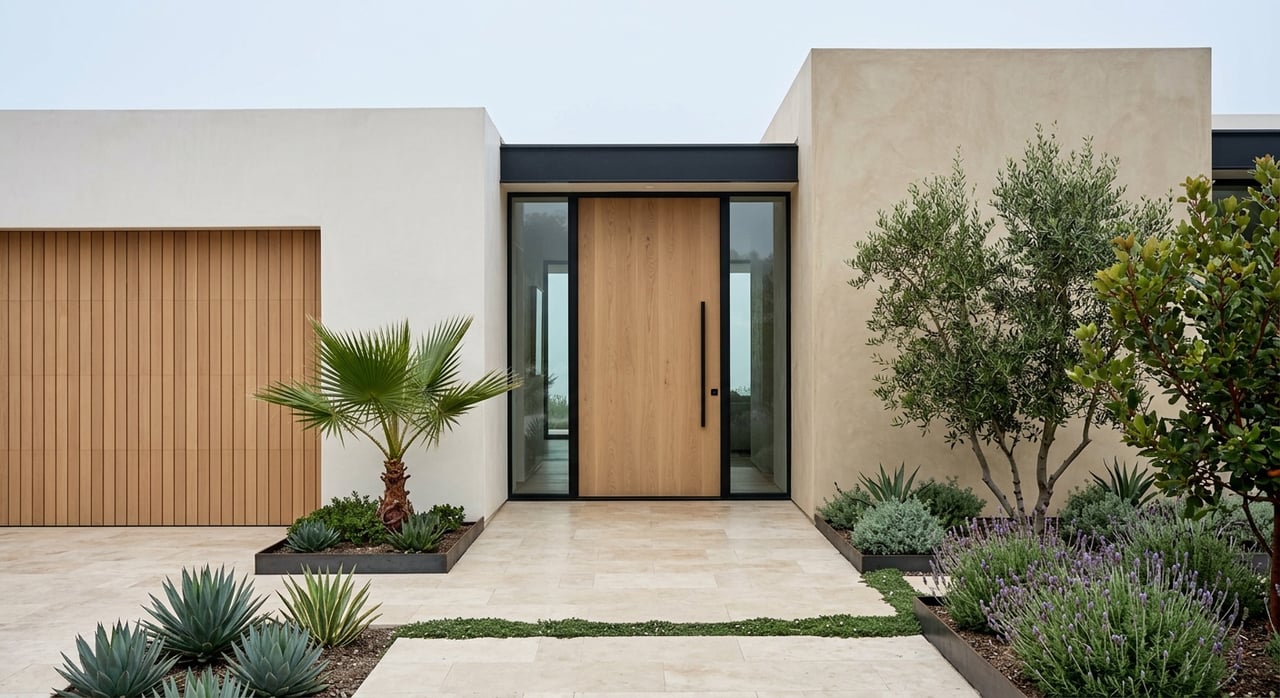
If you are preparing to sell a luxury home in San Diego, one mistake can cost you time, leverage, and final sale price: reading the market too broadly. Luxury here does not move as one market, and serious sellers need more than a county headline to set the right strategy. When you understand how your specific price band and neighborhood are behaving, you can make better decisions on pricing, timing, and presentation. Let’s dive in.
Why San Diego Luxury Is Not One Market
In San Diego, luxury is best understood as a collection of micro-markets. Realtor.com places the April 2026 entry point for the top 10% of listings in the San Diego-Chula Vista-Carlsbad metro at $2,851,750, but that number is only a moving threshold based on local listing prices.
That matters because luxury is not a fixed price tag. A home in La Jolla may sit near that metro cutoff, while Del Mar and Rancho Santa Fe are more clearly positioned above it. For you as a seller, that means your strategy should be built around your exact enclave and price tier, not a generic “luxury market” label.
Start With the Three Signals That Matter
If you want to read the market like a serious seller, focus on three core indicators: active inventory, days on market, and percent of original list price received. Together, these numbers show whether your segment is moving quickly, sitting longer, or requiring more negotiation.
These are more useful than broad market chatter because they reveal how buyers are behaving in your price range right now. In a luxury market, especially along the coast, small shifts in supply and timing can change your position quickly.
Active Inventory Shows Your Competition
Active inventory tells you how many homes are competing for the same buyer pool. SDAR defines this as the number of properties available for sale in active status at the end of a given month.
In April 2026, La Jolla had 223 homes for sale, up 19.09% year over year. Del Mar had 71 homes for sale, down 20.51% year over year, and Rancho Santa Fe had 136 homes for sale, down 20.41% year over year. Those differences matter because the competitive picture in each enclave is very different.
In smaller luxury markets, inventory changes can have an outsized effect. When there are fewer than 150 active listings, even a small number of new listings or closings can noticeably affect pricing and pace. That is one reason broad county averages often miss what is really happening in coastal luxury pockets.
Days on Market Reveals the Market’s Pace
Days on market helps you understand how long buyers are taking to absorb inventory. SDAR defines it as the average number of days between when a property is listed and when an offer is accepted.
In April 2026, median days on market were 36 countywide and 34 in San Diego city. In the luxury enclaves, the pace was slower: 46 days in La Jolla, 48 days in Del Mar, and 69 days in Rancho Santa Fe.
That slower rhythm is not necessarily a warning sign. It is often a normal part of higher-end selling, where buyers tend to be more selective and inventory can be more unique. Still, it does mean you should plan for a process that rewards patience, strategy, and strong positioning from day one.
List-to-Sale Ratio Shows Pricing Power
The percent of original list price received is one of the clearest measures of pricing discipline. It compares the final sales price with the original asking price.
In March 2026, that ratio was 100% countywide and 100% in San Diego city. In luxury coastal areas, the ratio softened to 99% in La Jolla, 97% in Del Mar, and 96% in Rancho Santa Fe.
This does not suggest weakness across the board. It shows a gradient. As price points rise, buyers typically push harder on value, and homes often close farther below their original list price than they do in the broader market.
Price Band Matters as Much as Neighborhood
Neighborhood is only half the story. Your price band may be even more important when you are planning your sale.
SDAR’s June 2025 figures show clear differences by tier. The $1.25M to $2M range had 1,198 active listings and 3.6 months supply. The $2M to $5M range had 883 active listings and 5.1 months supply. Above $5M, there were only 276 active listings, but months supply rose sharply to 12.1.
That is a critical distinction. Fewer listings at the very top does not always mean less competition in a practical sense. It can also mean a smaller buyer pool and a slower absorption rate.
What Months Supply Tells You
Months supply of inventory measures how long it would take to sell the current active listings based on the pace of pending sales. In plain terms, it helps you gauge whether the market is moving briskly or building backlog.
For serious luxury sellers, this is one of the most useful numbers to watch. A 5.1-month supply in the $2M to $5M range suggests a market that can still move with the right pricing and presentation. A 12.1-month supply above $5M points to a much slower environment where overpricing can leave a listing exposed for far too long.
The Higher You Go, the More Precision Matters
The data shows a consistent pattern: as prices rise, homes generally take longer to sell and close at a lower percentage of original list price. In SDAR’s June 2025 breakdown, homes in the $1.25M to $2M range sold in 33 days on average, compared with 41 days in the $2M to $5M range and 60 days above $5M.
The pricing pattern follows the same curve. The $1.25M to $2M tier received 97.4% of original list price, the $2M to $5M tier received 95.7%, and the $5M+ tier received 92.7%.
If your home sits above roughly $2M, the market is less forgiving of aspirational pricing. If your home is above $5M, time becomes one of the biggest signals to respect. A slower pool of qualified buyers means your launch strategy, presentation, and negotiation plan need to be especially tight.
How Serious Sellers Should Read La Jolla, Del Mar, and Rancho Santa Fe
While every property is unique, current data offers a practical framework for reading San Diego’s top coastal enclaves.
La Jolla: Near the Luxury Cut Line
La Jolla sits near the metro luxury threshold, which makes it an especially nuanced market. In April 2026, it had 223 homes for sale and a median 46 days on market, with sellers receiving 99% of original list price in March 2026.
That suggests a market where buyers are still engaging, but where competition has increased with the rise in inventory. If you are selling in La Jolla, you may have more room than in higher tiers to capture strong pricing, but only if your home enters the market with a clear value proposition.
Del Mar: Tighter Inventory, Thoughtful Buyers
Del Mar had 71 homes for sale in April 2026, down more than 20% year over year. Median days on market were 48, and sellers received 97% of original list price.
Lower inventory may sound like a simple advantage, but it does not remove the need for discipline. Buyers in Del Mar are often comparing a small set of premium options very closely, which makes quality presentation and accurate pricing especially important.
Rancho Santa Fe: Slower Pace at the Top
Rancho Santa Fe had 136 homes for sale in April 2026, also down more than 20% year over year. Yet median days on market were 69, and sellers received 96% of original list price.
This is a good example of why inventory alone never tells the full story. Even with reduced supply, the market can still move slowly when homes are larger, more specialized, or positioned at higher price points. If you are selling here, patience matters, but so does avoiding an opening price that gives buyers too much room to negotiate.
What This Means for Your Selling Strategy
If you are serious about selling well in San Diego’s luxury market, your first goal is not simply to list. It is to position your property in the right micro-market, against the right competition, and at the right price band.
A smart approach usually comes down to a few priorities:
- Study your immediate competition, not just county averages
- Compare your home to active, pending, and recently sold properties in the same price range
- Respect how days on market stretch as prices rise
- Avoid testing the market with a price that assumes buyers will “make an offer”
- Present the home at a level that matches buyer expectations in your tier
- Build a launch plan that reflects whether your property benefits from broad exposure, discreet marketing, or a more selective strategy
For high-value homes, execution matters just as much as analysis. Sellers often benefit from a tailored plan that combines pricing discipline, concierge-level preparation, and a negotiation strategy designed for a smaller, more selective buyer pool.
Why Experience Matters in Luxury Micro-Markets
In a market like San Diego, broad knowledge is helpful, but local luxury experience is what helps you interpret the signals correctly. Reading La Jolla, Del Mar, or Rancho Santa Fe requires more than knowing median numbers. It means understanding how buyer expectations shift by location, price point, and property type.
That is especially true when timing, discretion, or off-market positioning are part of the conversation. A serious seller needs guidance that goes beyond surface-level trends and turns market data into a clear action plan.
If you are considering a sale in La Jolla, Del Mar, Rancho Santa Fe, or another San Diego coastal enclave, The Lotzof Group can help you evaluate your home’s position, pricing strategy, and next best steps with the discretion and market insight luxury selling demands.
FAQs
What is considered a luxury home price in San Diego?
- In April 2026, the top 10% of listings in the San Diego-Chula Vista-Carlsbad metro started at $2,851,750, according to Realtor.com. Because that threshold is percentile-based, it can move with the market.
How long does it take to sell a luxury home in San Diego?
- It depends on location and price range. In April 2026, median days on market were 46 in La Jolla, 48 in Del Mar, and 69 in Rancho Santa Fe, while SDAR’s June 2025 data showed 60 days on market for homes priced above $5M.
What does months supply mean for San Diego luxury sellers?
- Months supply estimates how long current inventory would take to sell based on the pace of pending sales. In June 2025, SDAR reported 5.1 months supply in the $2M to $5M range and 12.1 months supply above $5M, showing a much slower market at the top end.
Should San Diego luxury sellers price high to leave room for negotiation?
- Current data suggests caution. In March 2026, sellers received 99% of original list price in La Jolla, 97% in Del Mar, and 96% in Rancho Santa Fe, while SDAR’s June 2025 price-tier data showed 92.7% above $5M, indicating less room for aspirational pricing at higher tiers.
Why do San Diego luxury sellers need micro-market analysis?
- San Diego luxury behaves differently by enclave and price band. Inventory, days on market, and list-to-sale ratios can vary meaningfully between areas like La Jolla, Del Mar, and Rancho Santa Fe, so a broad county snapshot may not reflect your home’s actual competitive position.