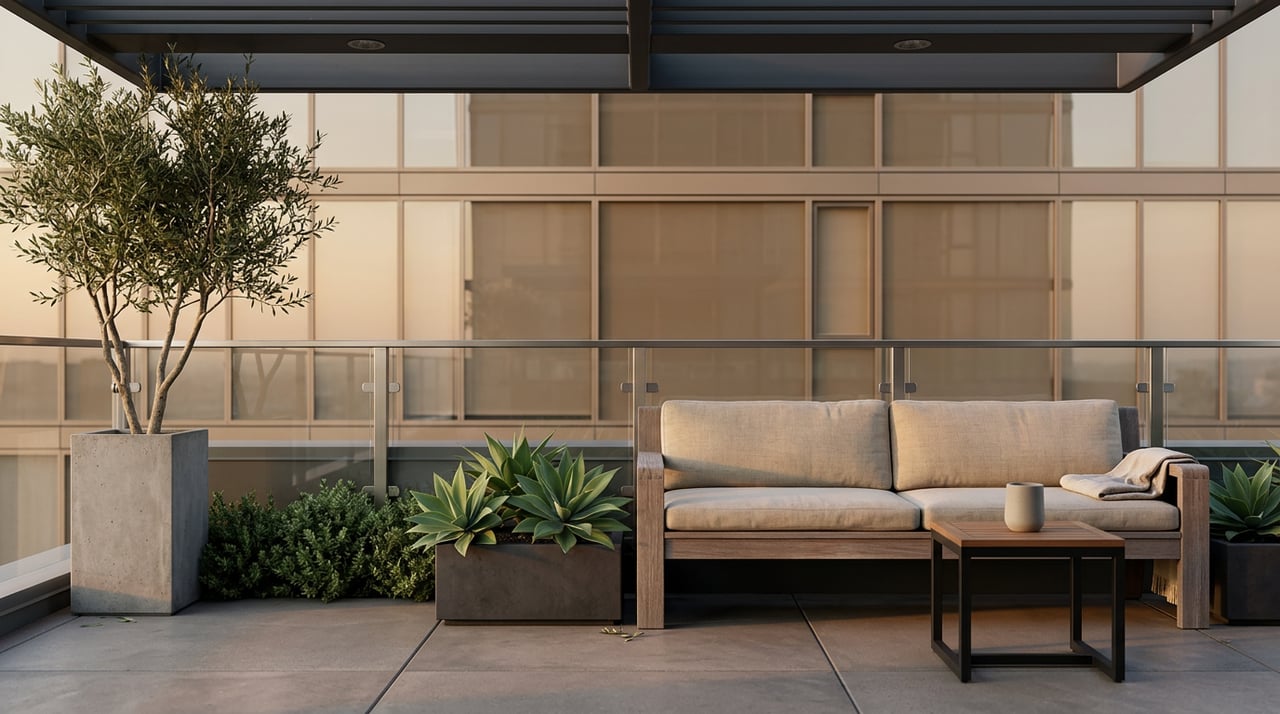
Zuma opened inside The Guild Hotel on August 10, and if you tried to get a table that first week, you already know reservations went fast. The contemporary Japanese brand's first California location took over a dedicated entrance at 500 West Broadway, built out to roughly 12,000 square feet with seating for about 270 guests across a sushi counter, a robata grill, an indoor dining room and a jungle-dense outdoor terrace framed by hand-carved teak screens. It is the kind of arrival that gets treated as a verdict on downtown, proof the neighborhood has finally arrived.
That framing gets the sequence backward. Zuma did not make West Broadway a destination. It showed up after the corridor had already filled in around it. If you live in this stretch of downtown, you felt that shift before any restaurant confirmed it.
The Math That Predates the Restaurant
Roughly two blocks from the Guild Hotel, the $510 million West tower at 1011 Union Street finished construction with 431 apartments layered over office and retail space. Its companion building, The Torrey, is under construction now and will add another 450 units along with a Whole Foods Market. Between the two towers, that is close to 900 new residential units landing within a few blocks of a hotel that, until this year, had no long-term restaurant partner at all.
Guild co-founder Kevin Mansour has been direct about what that density means for the property. The hotel is building a street-level pool and garden lounge next to Zuma's entrance, part of what he calls a push toward an urban resort identity rather than a conventional business hotel. Mansour has also said plainly that operators like Zuma tend to arrive early in a market and that everyone else follows once they do. Read that the way a resident would read it: the rooftops came first, the restaurant came second, and the reason West Broadway suddenly feels different this month is that thousands of people were already living close enough to walk to it.
That is also why the Guild is investing in things beyond the restaurant itself. The hotel's Border Series, an art program curated by advisor Jennifer Findley exploring identity and cross-border creative exchange, is expanding alongside the food and beverage build-out. None of that reads like a hotel chasing tourists. It reads like a hotel positioning itself for the people who now live within walking distance of its lobby.
What's Actually on the Menu, and What It Signals
Zuma's design team built the San Diego location around five specific choices, according to the restaurant group's head of design, Lucy Robinson: an understated version of the brand's usual luxury, a true 50/50 split between indoor and outdoor seating to take advantage of the year-round climate, local architectural cues folded into the Japanese aesthetic, a color palette drawn from the pinks, oranges and yellows found in coastal stone, and an energy level the brand tries to hit in every location it opens.
Mansour described the room in blunter terms: a conversation pit of restaurants, the kind of space people build entire evenings around rather than stopping in for a quick dinner before moving on. In other Zuma markets, he's noted, people show up late or drift in after eating somewhere else entirely, treating the bar as its own late-night destination. If that pattern holds here, West Broadway just picked up a room that keeps people out past a normal downtown dinner hour, which changes the texture of a block that used to empty out by 9 p.m.
Reservations are open now through the restaurant's own booking system, and the location currently runs dinner service seven nights a week.
The Waterfront Never Stopped Moving This Summer
West Broadway isn't the only part of downtown that shifted shape this August. A few minutes south, Seaport Village has kept its own calendar running all summer, and most of it costs nothing to show up for.
Ringers, the open-air roller rink along the Embarcadero near 821 West Harbor Drive, has been drawing an after-work and weekend crowd all season. On the third Friday of every month, The Headquarters at Seaport hosts Salsa Under the Stars in its courtyard at 789 West Harbor Drive, a free outdoor dance night with live music from Manny Cepeda & Orchestra. This month's date lands on August 21, with no partner or experience required to join in.
A few of the other fixtures that anchor a downtown week this time of year:
- Little Italy Mercato, Saturdays 8 a.m. to 2 p.m., produce, seafood, bread and local crafts along the same blocks that have run the market for years
- Gaslamp Artisan Market, Saturdays and Sundays 10 a.m. to 4 p.m. on Fifth Avenue, handmade goods and jewelry in the middle of the historic district
- Salsa Under the Stars, third Friday of the month at The Headquarters at Seaport, August 21 this cycle
None of this is new in the sense of being invented this year. What's changed is who's showing up. With nearly 900 additional units of housing landing within a short walk of these markets and this waterfront, the crowd at a free Friday night salsa set looks less like tourists killing an evening and more like people who live four blocks away and walked over.
The Concert Calendar Is Doing Double Duty
Downtown's live music this August has been split between two very different rooms, and both matter if you live close enough to hear them from your balcony. Waterfront Park hosted Lane 8 with Sultan + Shepard on August 9, an electronic set that started at 3 p.m. and pulled a crowd within walking distance of Little Italy's restaurants. At the other end of downtown, Gallagher Square next to Petco Park closes out the month on August 30 with My Chemical Romance, one of the bigger stadium-adjacent shows the ballpark district has hosted this summer.
Neither show exists because of Zuma or the residential towers. But the fact that downtown can now support a waterfront electronic show and a stadium-square rock concert in the same month, on top of a monthly free salsa night and a nightly roller rink, says something about the density of people who now consider these their neighborhood events rather than a special trip downtown.
What This Actually Changes If You Live Here
The easy story is that Zuma arriving means downtown has made it, the same way people said it about other openings before. The more accurate story is that the restaurant followed the residents, not the other way around. Roughly 900 new apartments went up first. The hotel repositioned around them second. The restaurant, the pool and garden lounge, and the expanded art program all came after that math was already settled.
If you've noticed West Broadway feeling busier on a Tuesday night, or the line for the roller rink running longer than it used to, or a salsa night at Seaport pulling a crowd that skews more local than visitor, that's not atmosphere. That's the corridor absorbing the people who already moved in before the businesses caught up to them.
For a downtown resident, the practical takeaway is straightforward: reservations at Zuma are worth locking in now while the opening buzz is still loud, the third Friday salsa night at The Headquarters is free and walkable if you're anywhere near the Embarcadero, and the next few weekends give you a real choice between a waterfront electronic set and a ballpark-adjacent rock show without leaving your own neighborhood.
If you're weighing what any of this means for your own home's value in a corridor that's clearly still filling in, The Lotzof Group can walk you through it. Request a confidential home valuation whenever you're ready to talk specifics.